
What Is An LCD Module? LCD Glass, Panel And LCM Explained
Quick answer: an LCD module, often called an LCM, is a display that is ready to connect to a product. It combines the LCD glass with what the glass needs to work: driver electronics, an electrical connection such as pins or an FPC, usually a backlight, and a frame or PCB for mounting. Bare LCD glass (the cell) is only the liquid crystal between two glass plates with polarizers; an LCD panel usually means the glass with its drivers attached but without the complete mechanical and backlight assembly.
SuccessLCD supplies all three levels for OEM projects: custom segment LCD glass, monochrome LCD and LCM modules, and TFT LCD modules, with touch panels and cover lenses where the product needs them.
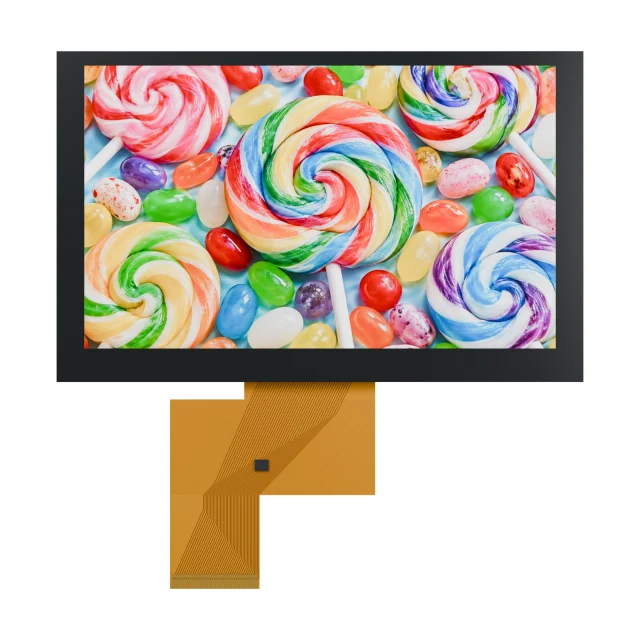
LCD Glass Vs LCD Panel Vs LCD Module
| Level | What it includes | What the product designer must add |
|---|---|---|
| LCD glass (cell) | Two glass substrates, liquid crystal, electrodes, seal and polarizers | Driver, connection, backlight if needed, mounting |
| LCD panel | Glass with drivers attached, typically used for TFT panels | Backlight, frame and interface electronics, depending on the panel |
| LCD module (LCM) | Glass, drivers, connection, backlight where required and frame or PCB | Host interface, firmware, power and the enclosure window |
The words are used loosely in the market, so always check what a quotation or drawing includes: driver IC, backlight, connector, touch panel and cover lens.
Main Types Of LCD Module
- Segment LCD: fixed digits, icons and symbols. Supplied as glass for direct drive by a microcontroller, or as a module with a driver. See custom segment LCDs.
- Character LCM: a grid of character cells such as 16 × 2 or 20 × 4 with a built-in font. See the character LCD module guide.
- Graphic LCM: a monochrome dot-matrix display such as 128 × 64 for free-form text and graphics. See graphic LCD display modules.
- TFT LCD module: a color active-matrix display with an interface such as SPI, MCU, RGB, LVDS or MIPI. See what is a TFT LCD display.
How The Driver Is Mounted: COB, COG And Others
| Build | Where the driver sits | Typical result |
|---|---|---|
| Chip-on-board (COB) | Driver die bonded to a PCB behind the glass and covered with epoxy | Robust module on a PCB with header pins and mounting holes |
| Chip-on-glass (COG) | Driver IC bonded directly on the glass ledge | Thin, compact module connected by FPC or pins; see COG LCD display |
| Direct-drive glass | No driver on the display; the host microcontroller drives segments and commons | Lowest part count for simple segment displays |
| TFT module | Driver ICs on the panel, with the module FPC carrying the display interface | Ready-to-connect color module with backlight |
The connection method follows the build: pins, FPC, zebra connectors or heat seal. The FPC vs FFC and LCD connection guide compares them.
Backlight And Optical Mode
Transmissive LCD modules need a backlight, normally LEDs with a light guide behind the glass. Reflective modules use room light and may have no backlight at all, while transflective modules use both. The optical mode, backlight color and brightness are part of the module specification. See the LCD backlight module guide and transflective LCD displays.
What To Specify For An LCD Module
- Display content: segment artwork, character format, graphic resolution or TFT resolution.
- Size and mechanics: outline, viewing area, active area, thickness and mounting.
- Interface and connection: host interface, logic voltage, connector type, pitch and pin assignment.
- Optics: LCD mode (for example TN, STN, FSTN, VA or IPS), viewing direction, backlight and brightness.
- Environment: operating and storage temperature, humidity and sunlight.
- Additions: touch panel, cover lens and bonding if required.
For the full checklist, see what to include in a TFT LCD module RFQ and the LCD module drawing and specification review checklist.
Video: LCD Glass, Panel And Module Explained
This short SuccessLCD explainer shows the difference between LCD glass, an LCD panel and an LCD module, then COB and COG builds and segment and character displays on real catalogue parts.
SuccessLCD Catalogue Examples
| Reference | Level and build | Notes |
|---|---|---|
| S04773D | Segment LCD glass with pins | HTN, 32 pins in two rows of 16, 2.54 mm pitch |
| S4132D | 20 × 4 character LCD glass | STN, ITO contact areas for a zebra connection, 85.00 × 38.00 mm outline |
| S12864D | 128 × 64 graphic COB module | 93 × 70 mm PCB, metal bezel, 20-pin header at 2.54 mm pitch |
| S4210D | COB LCD for power supplies | Chip-on-board with pins |
| S2947D | Segment COG LCD | Chip-on-glass with FPC and backlight |
| S2983D | Dot-matrix COG LCD | Chip-on-glass with FPC |
| S35001D | 3.5-inch TFT LCD module | 320 × 240, RGB, capacitive touch, 76.96 × 63.96 × 4.70 mm outline |
Final construction and specification are confirmed for each project. Browse monochrome LCD and LCM modules and TFT LCD modules.
LCD Module FAQs
What does LCM stand for?
LCM stands for liquid crystal module, or LCD module: an LCD display assembled with its driver, connection, backlight where needed and mounting frame or PCB so that it can be connected directly to a product.
What is the difference between an LCD panel and an LCD module?
An LCD panel is the glass with its drivers attached. An LCD module adds what is needed to use it in a product, such as the backlight, frame or PCB and the connector, and sometimes a touch panel and cover lens.
What is the difference between COB and COG LCD modules?
In a COB module the driver die is bonded to a PCB behind the glass and covered with epoxy, giving a robust board with pins and mounting holes. In a COG module the driver IC is bonded directly on the glass, giving a thinner, more compact display connected by FPC or pins. The COG vs COB comparison covers footprint, power parts and rework in detail.
Does every LCD module have a backlight?
No. Transmissive modules need a backlight, reflective modules use ambient light and may have none, and transflective modules can use both. The optical mode is chosen for the product’s lighting conditions.
Can an LCD module be customized?
Yes. Segment artwork, glass outline, connection method, backlight color, LCD mode, interface, touch panel and cover lens can be adapted. A standard module is adapted first where possible; a new design is used when the product needs it.
Need an LCD module for your product? Send the display content, size, interface, environment and enclosure details. Send your display requirements for an engineering review, or read how LCD manufacturers differ. Browse TFT LCD display modules or see custom LCD modules.