
Medical LCD Display Modules for OEM Devices
Medical device display engineering
A medical LCD display module must fit the device, remain readable in its real environment and stay supportable through the product lifecycle.
SuccessLCD reviews standard and custom medical LCD solutions for OEM projects. The engineering discussion covers the display interface, optical stack, touch and cover lens, mechanical envelope, operating environment and replacement risk—not only diagonal size and resolution.
On this page
Requirements to define before selecting a medical LCD
Display size and mechanical fit
Confirm active area, module outline, thickness, mounting points, FPC direction and connector position. For an existing device, provide the original drawing or part number.
Resolution and host interface
Match the UI, processor and available bandwidth to RGB, LVDS, MIPI DSI or another interface. Verify voltage, pinout and initialization requirements before board layout.
Readability and optical stack
Define the viewing distance, ambient light, viewing angle, brightness target and reflection limits. A cover lens, anti-glare treatment or optical bonding can change the final result.
Touch and cleaning exposure
Specify glove use, water or gel exposure, cover thickness, edge treatment, printed area and cleaning method. Touch tuning must be evaluated with the final enclosure and cover lens.
Operating environment
Share operating and storage temperature, humidity, vibration, power limits and expected duty cycle. These conditions affect the panel, backlight, adhesives and touch stack.
Lifecycle and change control
State the forecast volume, expected production life and acceptable redesign window. Long-lifecycle projects should include an approved replacement and compatibility review process.
Selection priorities by device situation
| Device situation | Common display priorities | Useful evidence for review |
|---|---|---|
| Portable or handheld equipment | Power budget, brightness, viewing angle, touch response, weight and enclosure space. | Target runtime, processor/interface, mechanical opening and use environment. |
| Patient monitoring or diagnostic interface | Stable image presentation, readable UI, consistent viewing angle and controlled reflection. | UI screenshots, viewing distance, ambient light, brightness target and color requirements. |
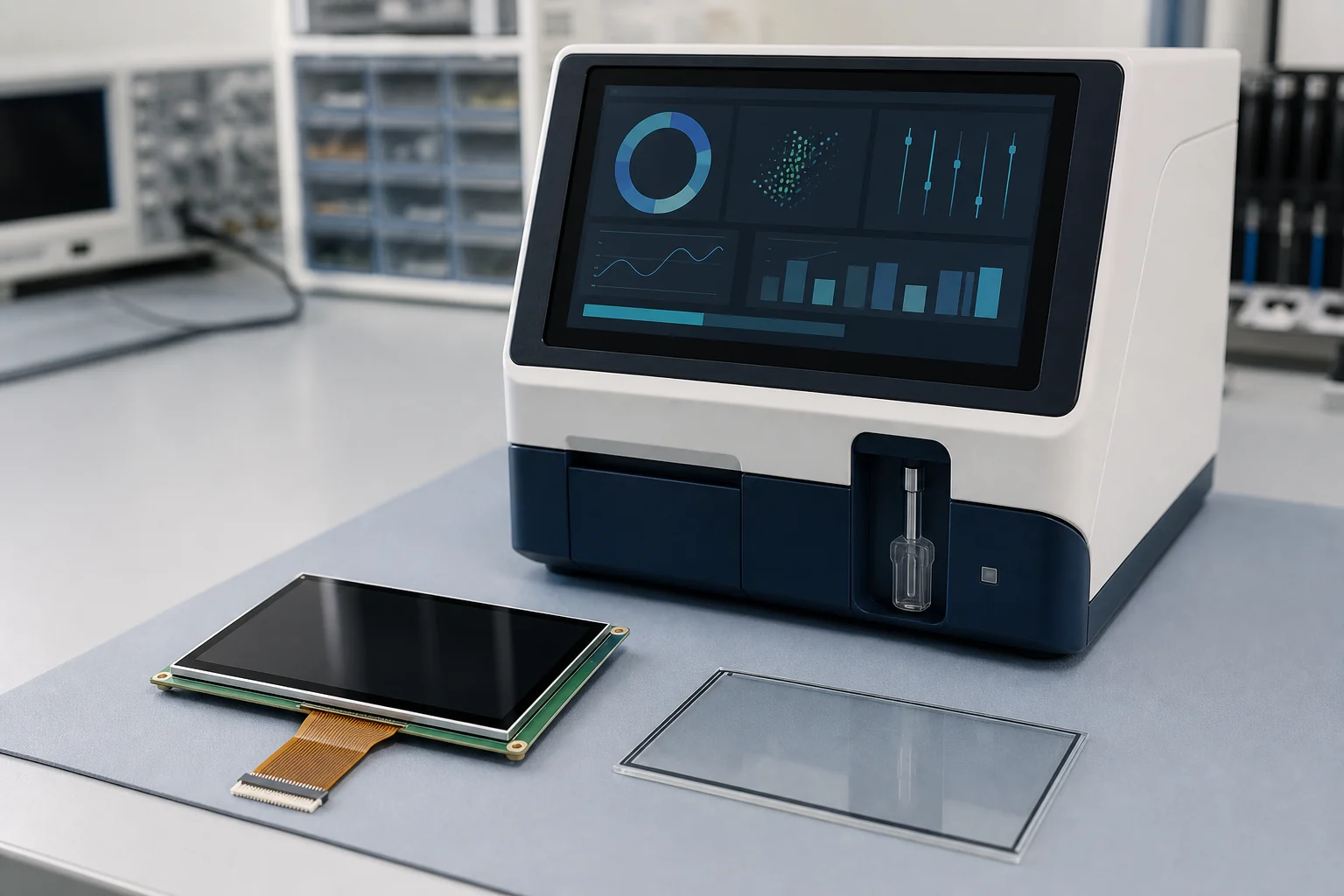
| Laboratory or bench-top instrument | Mechanical integration, cover lens, cleaning exposure, touch method and long-term supply. | Enclosure drawing, cleaning method, quantity forecast and expected production life. |
| Replacement for a discontinued module | Active area, outline, pinout, timing, FPC direction, backlight behavior and firmware impact. | Original part number, datasheet, photos, connector details and redesign constraints. |
Where customization usually matters
A custom medical LCD project does not always require a new panel. Many OEM requirements can be addressed by selecting a suitable standard TFT cell and adapting the interface, FPC, backlight, touch panel, cover lens or optical bonding stack. This can reduce development risk compared with unnecessary full-panel customization.
Start with the available TFT LCD module range, then use the custom TFT engineering process when the standard mechanical, electrical or optical configuration does not fit. For front-surface design, review touch and cover lens options and the trade-offs in optical bonding versus an air gap.
What to send for a useful engineering review
You do not need a finished specification before contacting a medical LCD display module supplier. Send the confirmed constraints first and identify what is still flexible.
- Target display size and resolution
- Active area or enclosure opening
- Host processor and preferred interface
- Brightness and viewing environment
- Touch, glove and cover lens requirements
- Operating and storage temperature
- Existing part number or drawing
- Prototype and annual quantity estimate
- Expected product lifecycle
- Required project test or documentation needs
Requirements review
Separate fixed constraints from preferences and identify missing interface, optical or mechanical information.
Module direction
Compare standard and customized options, then confirm the drawings and evidence needed for the preferred path.
Prototype validation
Evaluate the display in the real enclosure and operating conditions before production approval.
Important: selecting or customizing an LCD module does not by itself establish medical-device compliance. The device manufacturer remains responsible for the final risk analysis, regulatory pathway, system-level testing and approval of the complete product.
Medical LCD display module questions
What information is needed to select a medical LCD display module?
Start with display size, resolution, active area, interface, brightness, viewing environment, touch and cover lens needs, operating temperature, expected volume and product lifecycle. Include the existing part number or drawing for a replacement project.
Can a standard TFT LCD module be customized for a medical device?
Often, yes. A standard panel may be adapted through a custom FPC, interface board, backlight, touch panel, cover lens or optical bonding stack. Feasibility depends on the mechanical, electrical, optical and lifecycle requirements.
How should an obsolete medical LCD module be replaced?
Compare more than size and resolution. Verify active area, outline, pinout, timing, voltage, FPC direction, connector, backlight behavior, touch integration and firmware impact, then validate the replacement in the complete device.
Does a medical LCD module make the finished device compliant?
No. The final device manufacturer is responsible for risk management, regulatory requirements, system-level testing and approval. The display supplier should provide the agreed drawings, specifications and project evidence needed for that evaluation.
Discuss your medical LCD requirements
Send the constraints you already know. SuccessLCD can review the display size, interface, optical stack, touch and cover lens, environment, lifecycle and replacement requirements before an RFQ is finalized.


