
Wide Temperature TFT LCD Modules
Wide Temperature TFT LCD Module Selection
Built for display programs where temperature is part of the design risk
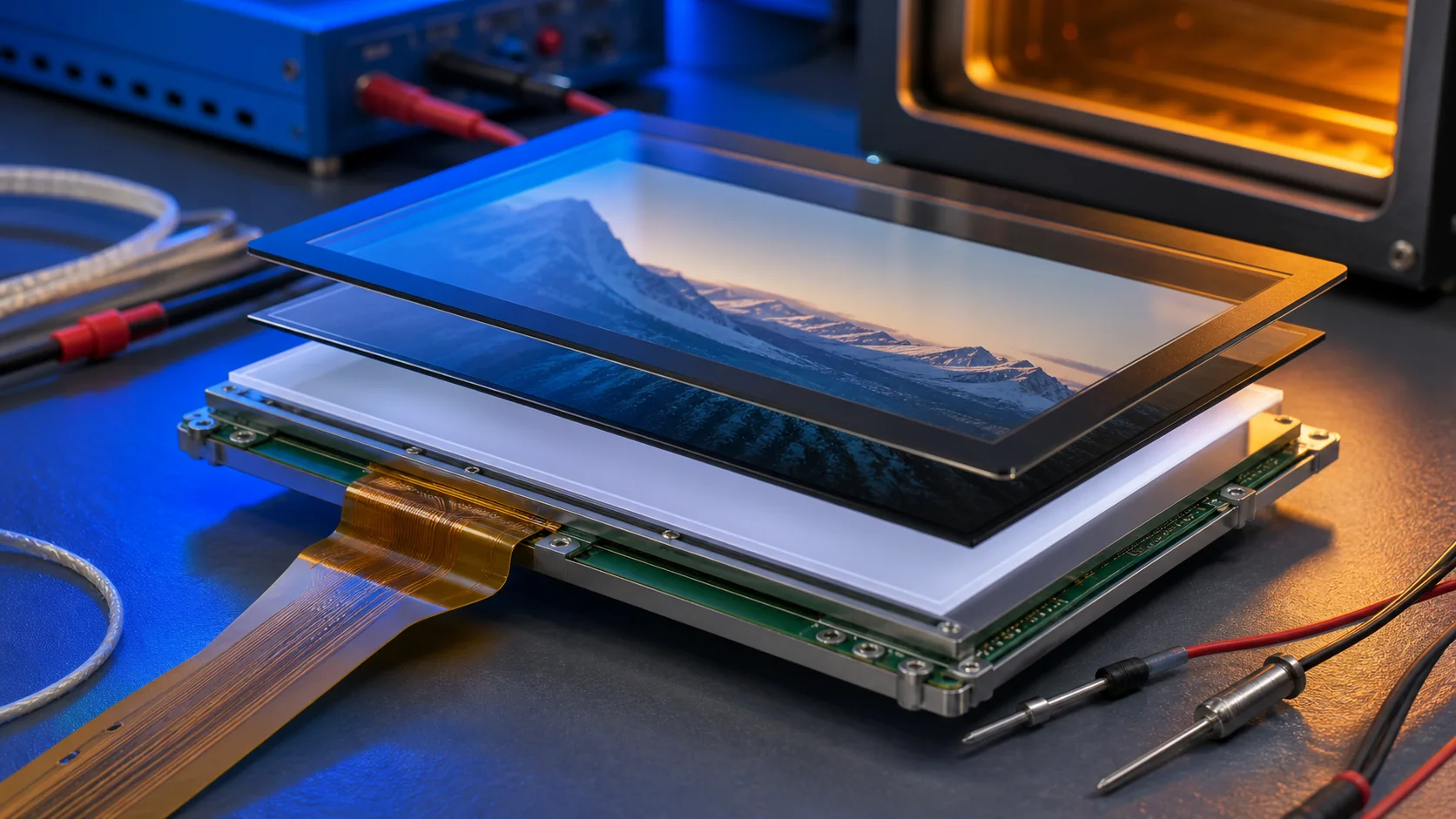
A wide temperature TFT LCD module is designed for stable operation through cold starts, hot enclosures and repeated temperature changes. Selection should consider the LCD cell, backlight, touch stack, interface, FPC, cover glass and mechanical structure together, because the complete assembly—not only the panel specification—must match the real equipment environment.
Definition
What makes a TFT module “wide temperature”?
A wide temperature TFT LCD module is not just a standard display placed in a hot or cold enclosure. It usually requires coordinated review of the liquid crystal mode, polarizer behavior, LED backlight derating, driver IC limits, FPC material, touch sensor stack, cover glass adhesive and mechanical stress around the display opening.
For B2B buyers, the practical question is simple: can the complete display assembly meet the device environment through production, shipment, installation and years of field use? That is why the RFQ should include both operating temperature and storage temperature, plus humidity, sunlight, vibration, duty cycle and enclosure notes.
Selection Matrix
Wide temperature TFT LCD options to review before RFQ
| Design factor | What to specify | Why it matters |
|---|---|---|
| Operating temperature | Required powered operating range, such as -20 to +70 deg C or -30 to +85 deg C. Confirm the selected module rating and temperature measurement point; specify cold-start conditions separately. | Determines LCD material, backlight behavior, power design and whether the module needs additional validation. |
| Storage temperature | Shipping, warehouse and inactive storage limits, especially for export or vehicle-mounted equipment. | Storage stress may exceed the device’s normal powered operating range and can affect polarizers, adhesives and seals. |
| Thermal cycling | Expected movement between cold, normal and hot conditions, including cycle count or test requirement when known. | Repeated expansion and contraction can expose risks in bonding, connectors, housing pressure and the front stack. |
| Brightness and duty cycle | Indoor, semi-outdoor or sunlight-readable target, plus expected daily operating hours. | LED brightness, heat, lifetime and readability must be balanced; high brightness can increase thermal load. |
| Touch and cover lens | No touch, RTP, PCAP, cover glass thickness, AG/AR/AF coating and bonding preference. | Additional layers change optical performance, mechanical stack height and temperature cycling behavior. |
| Interface | RGB, LVDS, MIPI DSI, MCU or SPI, with controller board and cable length information. | Industrial systems often need stable signal margins, EMI planning and connector compatibility. |
| Mechanical integration | Active area, outline, mounting frame, FPC bend radius, gasket, enclosure and viewing direction. | Thermal expansion and enclosure pressure can create light leakage, mura or touch response variation. |
Documented module temperature ranges
Use these model-specific records as starting points for engineering review, not as interchangeable ratings or proof that the complete device has passed temperature testing.
| Model and display | Documented temperature limits | Controlled version and review boundary |
|---|---|---|
| COG-T700MI2XE-02 — 7-inch 1024×600 TFT LCD | Operating: -20°C to +70°C. Storage: -30°C to +80°C. |
V00 / 2024-09-14A. These limits do not establish suitability for a -30°C to +85°C operating requirement or a -40°C cold start. |
| COM31H3P76ULC — 3.1-inch round 480×480 TFT LCD | Recommended operation: -30°C to +85°C, measured at the panel surface. Storage: -40°C to +95°C (absolute maximum rating). |
Specification 22TLM118, Version 0.0 / 2023-02-15. Tentative / under development / subject to change. For preliminary evaluation; confirm the controlled revision and validation requirements before selection. |
Operating temperature describes powered operation under the specified conditions; storage temperature describes unpowered exposure. Neither a storage limit nor an operating range alone establishes cold-start performance or unchanged optical performance across the range. Specify the measurement point, start-up temperature, time to a usable image and acceptance criteria, then validate the selected module with the final backlight, touch, bonding and enclosure stack.
Share your required operating and storage ranges, cold-start criteria, preferred model and project quantity.
Best-fit Applications
Where wide temperature TFT LCD modules are usually required
Factory terminals, control equipment and measurement devices may run for long hours in cabinets where internal heat and ambient temperature must both be considered.
Kiosks, EV charging interfaces, agriculture equipment and outdoor instruments often combine wide temperature with high brightness or optical bonding.
Dashboards, logistics equipment, charging terminals and mobile devices can require cold-start review, vibration notes and sunlight readability planning.
Stable readability, lifecycle control and touch accuracy can be more important than maximum brightness for device panels used in controlled but demanding environments.
Battery, inverter, metering and monitoring systems may expose displays to heat accumulation and long service expectations.
Portable equipment needs review of touch response, lens protection, storage temperature and drop-in mechanical compatibility.
Engineering Review Workflow
How SuccessLCD reviews a wide temperature TFT LCD module project
Confirm the real environment
Share ambient temperature, enclosure heat, sunlight exposure, humidity, duty cycle, storage conditions, mounting direction and target lifetime expectations.
Match display, touch and backlight stack
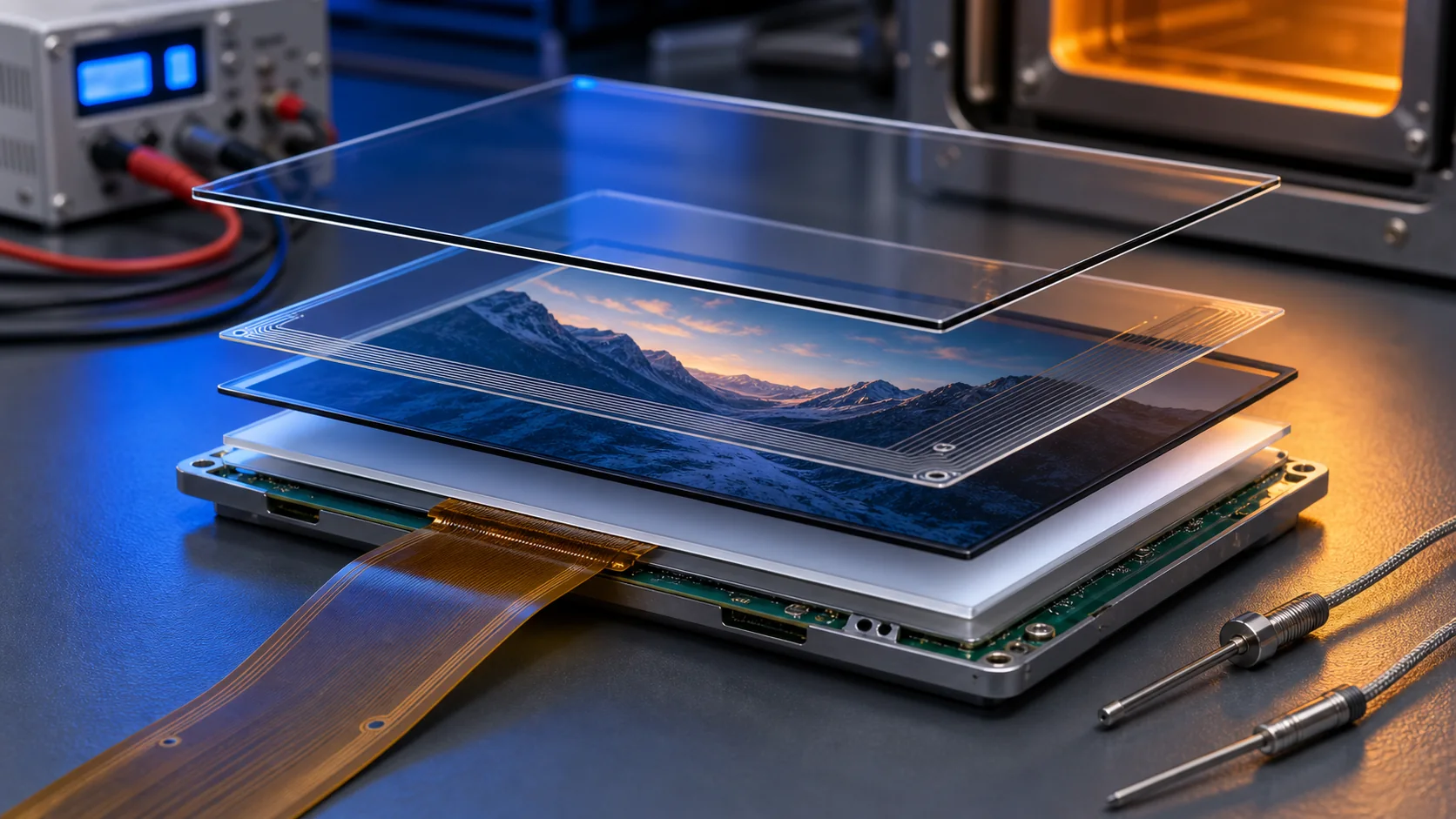
Review TFT size, resolution, brightness, viewing angle, touch layer, cover lens, bonding method, interface and FPC routing as a complete module design.
Check integration risks before sampling
Identify thermal stress, brightness derating, cable length, power sequencing, connector orientation and enclosure pressure before confirming a sample path.
Prepare a stable RFQ package
Document electrical, optical, mechanical and environmental requirements so sample approval and later production changes are easier to control.
Related Engineering Choices
Wide temperature often connects with brightness, bonding and industrial interface decisions
- High brightness TFT LCD modules Review when the device needs higher luminance for semi-outdoor or bright ambient conditions.
- Sunlight readable TFT LCD displays Use when direct sunlight, reflection control and optical bonding are central to the project.
- Industrial TFT LCD display modules Use for HMI, automation, rugged device and long-life industrial display programs.
- MIPI vs LVDS vs RGB LCD interface Review when controller compatibility or cable distance affects the module decision.
- Touch panel and cover lens options Review when PCAP or RTP, cover glass, coatings, bonding or sealing may affect the temperature design.
- TFT-LCD array process Use for upstream context on the backplane and material stack before module assembly.
RFQ Checklist
Information to send for a wide temperature TFT LCD module quotation
| RFQ item | Recommended detail |
|---|---|
| Display size and resolution | Diagonal size, active area, resolution, aspect ratio and any existing part number to match or replace. |
| Temperature range | Operating range, storage range, cold-start requirement and whether testing must include thermal cycling. |
| Optical requirements | Brightness, viewing angle, contrast expectation, indoor/outdoor use and glare/reflection concern. |
| Touch and lens stack | No touch, RTP or PCAP; cover glass thickness; AG/AR/AF coating; optical bonding or air-gap preference. |
| Electrical interface | RGB, LVDS, MIPI DSI, MCU or SPI; connector type; power voltage; cable length and controller board information. |
| Program information | Prototype quantity, annual forecast, target market, certification constraints and required production timeline. |
For a reusable purchasing format, use the TFT LCD module RFQ checklist before requesting samples or production pricing.
Buyer Questions
Wide temperature TFT LCD module FAQ
Is every industrial TFT LCD module also a wide temperature module?
No. An industrial TFT may be selected for long lifecycle, interface compatibility or mechanical durability, but the temperature range still needs to be confirmed from the module specification and complete assembly design.
Does -30 to +85 deg C mean the display will perform the same at all temperatures?
No. The range describes an operating target or rated condition, but response time, brightness, contrast and touch behavior can vary with temperature. The final project should review real operating conditions and test requirements.
Should high brightness be added to every wide temperature TFT?
Not automatically. High brightness improves readability in bright environments, but it can add heat and affect power design. Indoor industrial equipment may need moderate brightness, while outdoor devices may require high brightness and bonding together.
Can SuccessLCD customize the FPC, interface or cover glass for a wide temperature display?
Yes, project-dependent customization can include FPC routing, connector position, interface matching, touch panel, cover glass, coating and bonding review. The best path depends on target size, quantity, schedule and electrical requirements.
Is operating temperature the same as storage temperature?
No. Operating temperature covers the powered functional range, while storage temperature covers unpowered shipping, warehousing or idle exposure. Both should be defined because the stresses and acceptance checks are different.
What should be checked during wide temperature sample approval?
Check cold start, response speed, brightness stability, touch response, condensation risk, display uniformity, FPC and connector stress, hot-enclosure behavior, and readability after the final cover lens or bonding stack is installed.
Start the Engineering Review
Send your temperature range, display size, interface and application environment
SuccessLCD can review TFT module options for industrial, outdoor, transportation, energy, medical and embedded devices where operating temperature, storage temperature and long-term reliability matter.


